I love to peer through the veil via imagination and explore visions through art and illustration.
Latest Posts
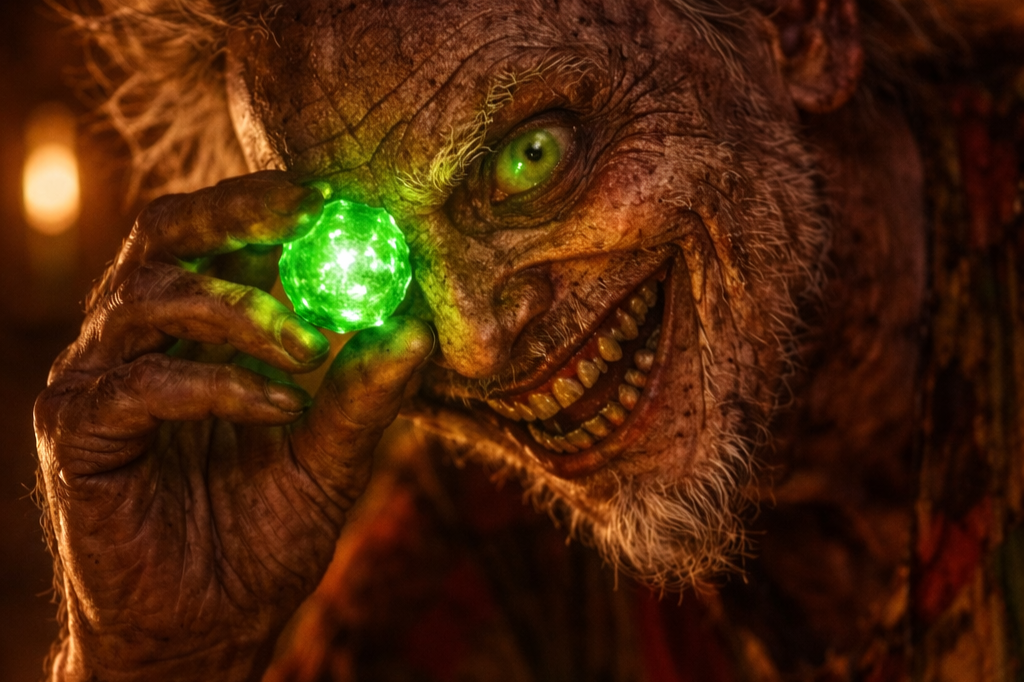
Romeria is a world that continues to unfold through images, video, and imagination. This short film marks a turning point in how the story is developing, revealing new layers of the underworld, its creatures, and the origins of Richard Ravenheart. By working across visual media as well as writing, Romeria has become a living process rather than a fixed narrative — one that feeds creativity, inspiration, and deeper storytelling as it grows.
The green came first — thick, luminous, almost wet. Not the kind of green that soothes, but the kind that stains. Moss, rot, stagnant water, earth pressed too long into itself. It didn’t feel symbolic. It felt physical, like something growing where it shouldn’t.
She emerged out of that texture rather than out of thought. Uneven. Out of proportion. Her head too large, her body carrying a weight it hadn’t agreed to. She didn’t move with intention so much as survival. Hiding when she could. Feeding when she had to. Screaming when everything inside her collided at once.
She wasn’t evil. She wasn’t divine. She was a consequence — a body altered beyond recognition, still conscious enough to feel the damage. A feral presence wandering the red world of Romeria, caught between growth and decay, instinct and memory.
This is not a story about power.
It’s a story about what survives it.
Romeria is a place where the trees do not offer shelter, wisdom, or peace. They glow, lure, trap, poison, watch, and wait. From trunks filled with pink, Turkish-delight sap to hypnotic leaves hiding liquid pits, from judgmental eye-trees to gas-belching plant caves, this world’s flora is hostile, absurd, and darkly funny. These illustrations embrace the uncanny — childlike yet unsettling — making Romeria feel less like a fantasy setting and more like a place that simply doesn’t care if you survive it.
Romeria is an unfolding world revealed through image rather than explanation. These artworks form part of a developing book, exploring myth, ritual, chaos, and the sacred feminine through intuitive, AI-assisted visual creation.
A meditation on the loss of inner illumination in modern life. This essay explores exoteric flatness, the severing of inner worlds, and the gradual de-illumination of imagination, drawing on esoteric perception, childhood vision, and the condition of a world lived entirely on the surface.
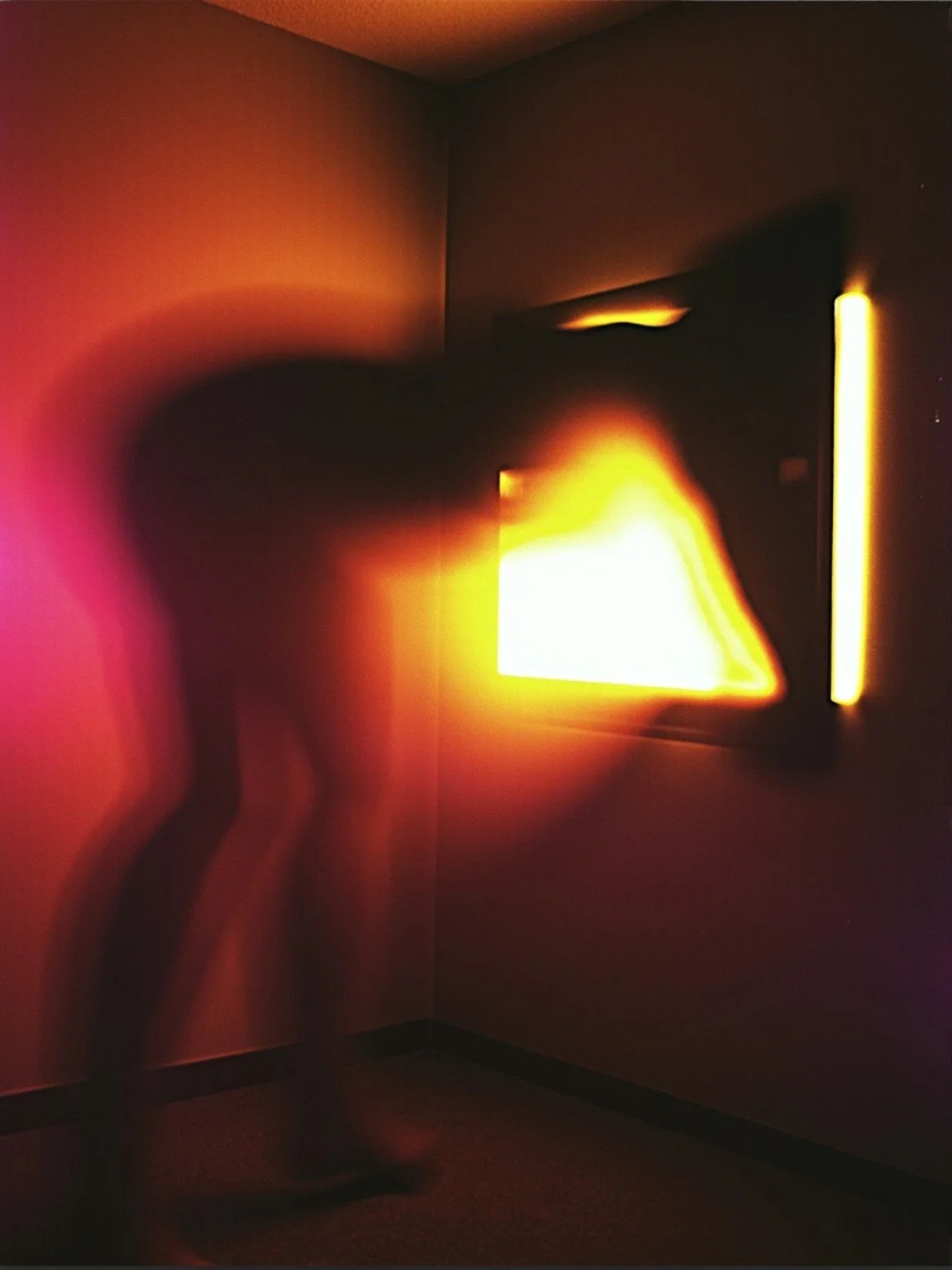
This photograph is not about screens or technology alone. It is about a quiet drift — a gradual movement away from inner substance and toward an exterior world that has become loud, saturated, and strangely hollow. The figure does not struggle against the light; it yields to it. And in that calm surrender lies the deeper question of our age: at what point does participation in the world become a form of disappearance?
This image did not arrive as an artwork, but as a residue of vision — a trace left behind by prolonged inner observation. It exists in a liminal state, somewhere between illumination and concealment, where light behaves like memory rather than exposure. The figure is not a body, but a threshold: perception opened, hollowed, and allowed to look inward upon itself. What emerges is an etheric architecture — neither symbolic nor mechanical — briefly stabilised within darkness, as if something forbidden has been quietly remembered rather than discovered.
The Tree of the Future did not arrive as an idea, but as an intrusion. It stands planted in the middle of the street—vast, artificial, and unmistakably wrong—yet no one seems to notice. Beneath it, people move as if sleepwalking, accustomed to an ugliness that has become invisible through repetition. This image is not an accusation, but a mourning: for imagination stripped of feeling, for individuality softened into uniformity, and for a civilisation that has mistaken survival for living.